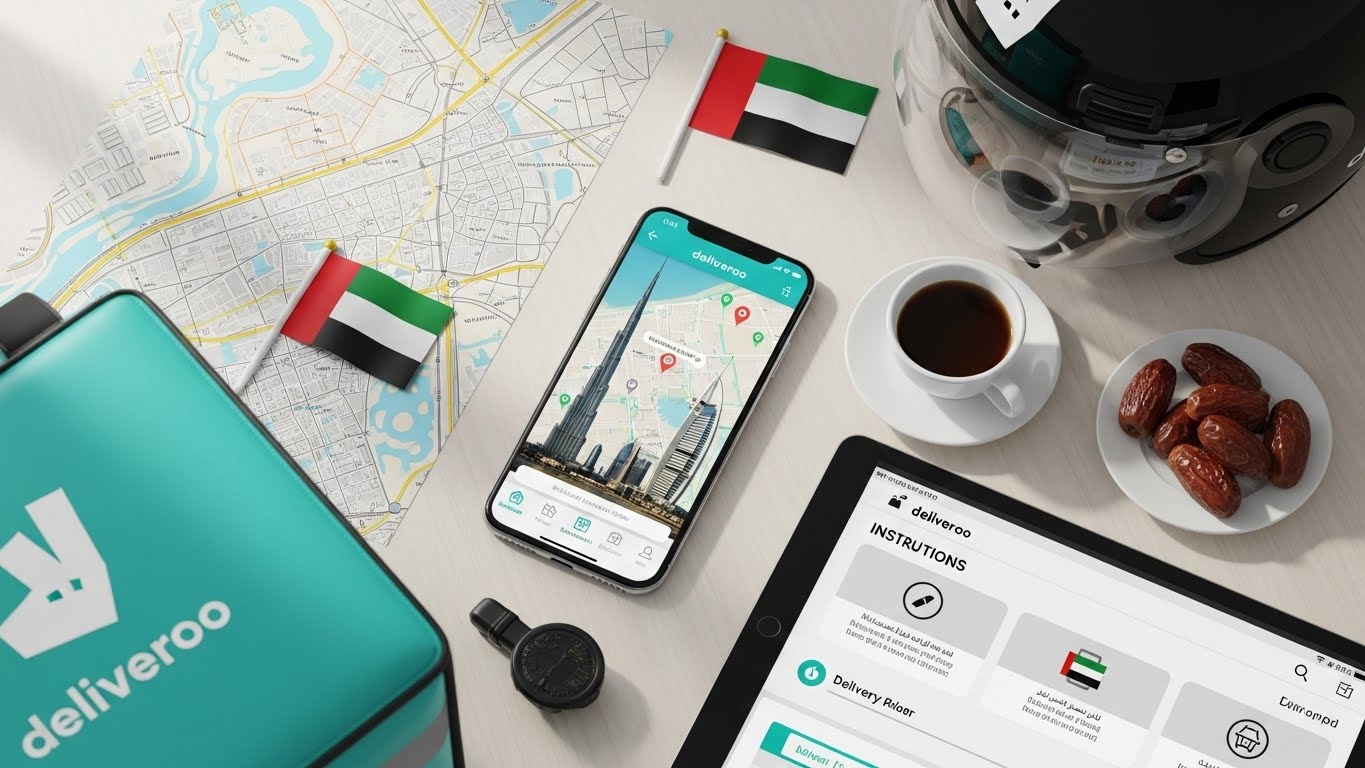
From the Ride App Deliveroo to the delivery services offered by several competitors, the delivery sector and the related services have transitioned to the use of riders to carry out flexible short-term jobs. The main technology of Delivery Partners is the rider apps on android and IOS. The apps allow riders to accept orders, navigate route deliveries, and view earnings. An in-depth analysis of the app focuses on analyzing the various features and working of the app through the different business functions of the app.
Due to the increasing number of on-demand deliveries and the apps catering to riders, there is an increasing need to understand the workings of the apps. In contrast to other apps in the gig economy, Deliveroo allows its riders to customize their working hours and earn the desired income. Available in Deliveroo Dubai as well as in Deliveroo Abu Dhabi, the system is designed for flexible earnings.
Research estimates the Global Digital Food Delivery market to reach a value of over 320 billion USD by the year 2029 with the market growing at a compounded annual growth rate (CAGR) of approximately 9.8%. Accelerated growth is as a result of a shift toward the convenience of food ordering through the use of apps compared to traditional dining. The growth in the market is also due to the improvements of technology and apps that provide a simplified method of ordering food and enhance the user confidence for rapid deliveries of food ordered from nearby restaurants.
It`s for such reasons, that services of Deliveroo are important to restaurants and to the people that need to work as delivery helpers.
What is a Deliveroo Rider App?
This app is created solely for delivery personnel. Rather than waiting around for notifications on upcoming orders, workers utilizing the app receive immediate notification. They are able to see pick-up locations along with drop-off locations on their digital maps. To use this, they log into the app on their mobile device using the Deliveroo Rider App. Once logged in, they can see the dashboard comprising their earnings data and other functions, which is updated daily.
This application operates seamlessly on devices for delivering on the rider app, which is the same for Deliveroo rider iOS. Deliveroo rider app users of either operating systems receive the same adjusted functionalities for their respective devices. Deliveroo has purposely designed the rider app for her to perform well on a wide array of mobile devices.
The app is linked to a single Deliveroo Hub that orchestrates all rider activities. These delivery partners can obtain a training guide for the Deliveroo hub’s user-friendly design. It is also the communication channel to support, thus simplifying the process of getting help when needed.
The Deliveroo Rider Application
Active Order Management
The application shows new orders including details of which restaurant to pick up from, which address to drop it off, and how much the order pays. Order fulfillment is up to the riders’ discretion, and they can take and skip orders as they see fit. However, location and order flow are smooth as the platform gives new orders at the right times based off of center of closeness without congestion or bottlenecks to the execution of the tasks. The flow of orders is adaptive and can change at competency levels of riders on the app.
Real-Time Navigation
The app is equipped to assist riders in determining the fastest and least congested roads to the restaurant. The app is inefficient as it influences the routes taken on based off of delays. All in all, the route guidance via the sequenced roads is not inefficient.
Income Tracking
Income is tallied based on the completed jobs, and a running total is displayed of the riders current income. The app also contains a history of income from previous jobs, and income is visible instantly.
Set Your Own Hours
Riders are able to determine their own shifts in a self service manner from the application. Once active, riders can log on to the app to receive orders at their own discretion and from their own location. This is helpful for students or other people.
Analytics of Performance
Cyclists have access to rich data apprising them of the frequency with which tasks are accepted, the level of promptness or slowness with which tasks are fulfilled, and customers’ satisfaction ratings. Knowledge of these factors provides couriers the opportunity to enhance their performance while improving the potential of earning more. Valuable information relayed from a tracking device provides pointers to facilitate the attainment of superior results. The gig economy is reported to employ over 77 million people around the world and food delivery is a significant contributor to the figure.
Support in the Application
The response to queries and the resolution of issues are expedited when help desk officers are provided with direct access to the support desk. Force riders experiencing issues outside the app to access support with basic features of the application. Users are able to send a message, make a call, or send a text and each communication method has support features.
Accessing the Deliveroo Rider App
Step 1. Start the process of using the application by downloading the Deliveroo Rider application from App Store or Google Play. After downloading the application, you should sign up using your personal information, an ID, and required documents. Afterwards submit the necessary documents which include a driving permit, a record of your vehicle, and proof of eligibility to work.
Step 2. Deliveroo reviews your documents to verify your account, and performs standard checks. Such reviews take around 3-5 business days. After your documents have been reviewed successfully, you will receive an email with information on how to access the Deliveroo app.
Step 3: Onboarding and Training You have to complete an online orientation session and have to choose to either complete additional online educational modules or head to a nearby Deliveroo Rider Hub to complete modules in-person. After onboarding, complete the training modules on using the app, accepting and picking up deliveries and delivery safety. Be informed about the gear and correct dress code.
Step 4: Equipment Setup : Be prepared with the required items: a working phone, an insulated delivery bag or backpack, and a suitable bike, scooter or motorbike as delivery transport. After downloading the Deliveroo Rider app, enter your login credentials and make sure the app is functional before going online.
Step 5: Start Accepting Orders When you are online and ready to accept new deliveries, switch your app status to “online”. The application will start notifying you of drop off delivery locations that are nearby and once you receive/drop off a delivery.
Step 6: Complete Deliveries Use the in-app GPS to navigate to the restaurant that you will be picking the order up from. After you have picked up the order, make sure you confirm the order in the app and be on your way to where the customer is. Log the delivery in-app as soon as you have delivered the order. If you have a cash payment, remember to hand that to the customer as well.
Best Delivery Alternatives
Talabat
In the Middle East, Talabat is the leader in the restaurant delivery service, and is the only service that provides riders with flexible working times and stable, predictable payouts. Talabat is the only service that provides riders with stable, predictable incomes based on the working area. The service is the only one with developed coverage in a number of cities in the UAE.
Uber Eats
Uber Eats is a food delivery service that is part of the Uber ecosystem and benefits from Uber’s name recognition. Uber Eats operates in a number of countries, and is the only service where riders have the option of switching from food delivery to passenger driving.
Careem NOW
Careem NOW is part of Uber and operates in the Middle East. The service has a custom local offering, and is well adapted to user’s preferences in the region. Due to Uber’s brand recognition, Careem is a trusted service to use in the Middle East.
Noon Food
Noon Food is a delivery service that is part of Noon, and its the newest service that is part of Noon. The service has incorporated more expensive, but more advanced technology. Noon Food gives riders more opportunities to earn from the added services that are part of Noon.
Zomato
Zomato has integrated meal delivery and restaurant search capabilities creating a fully functioning food service network. Their extensive list of restaurant partners ensures diners have numerous delivery and takeout options. Because of the steady demand for meal delivery, drivers take on profitable trips and also receive bonuses tied to their driving performance.
Riding the wave of changing consumer behaviors and digital adoption, the food delivery industry in the UAE is forecasted to grow 12.3% per year, continuing to defy economic downturns.
Business model of the Deliveroo rider application
The Deliveroo rider application generates revenue by collecting a commission on each order from their listing partner restaurants. Unlike traditional delivery services, Deliveroo adjusts rider pay based on distance and time in addition to a base pay and voluntary customer tip.
Deliveroo also generates revenue by membership subscriptions which provide faster deliveries and or reduced service fees.
The focus of Deliveroo’s business model is on balanced and seamless distribution of order to customers and revenue to riders.
Deliveroo is investing in technology to improve the speed and efficiency of their service by creating algorithms to provide riders with the most efficient route for delivery. Each stakeholder in the platform benefits from the faster delivery.
In the rider pay model, the driver gets a base fare plus distance and time-based surges. Tips and other bonuses come in feature-packed earnings boosters, and the dollar-per-delivery transparency is good rider payout model visibility.
Tips and bonuses come in feature-packed earnings boosters, and the dollar-per-delivery transparency is good rider payout model visibility.
Tech Stack used to Build the Deliveroo Rider App
Frontend Development
For Deliveroo Rider app iOS, the app runs through Swift and SwiftUI for a responsive performant seamless interface. Deliveroo rider app for Android is built in Kotlin and Jetpack Compose for modern device feature compatibility. Both are centered around responsive designs with intuitive ease of use for navigation. In front end development for Deliveroo Rider app iOS, the app runs through Swift and SwiftUI for a responsive performant seamless interface. Deliveroo Rider app for Android is built in Kotlin and Jetpack Compose for modern device feature compatibility. Both are centered around responsive designs with intuitive ease of use for navigation.
Backend Infrastructure
Node.js executes the backend, and seamless command of multiple asynchronous requests is one of its strengths. User information, previous orders, and activity logs are kept in MongoDB. Redis is used to augment the speed of frequently accessed data.
Real-time Communication
Order status changes and new orders come in real-time through WebSocket. This means couriers get drop-off instructions as soon as they are available, avoiding idle time. While the app is running remotely or in the background, notification services signal users are being kept updated.
Deliveroo operates in over 200 cities in 12 different countries and serves hundreds of customers daily.
Location Services
Using Bing Maps Routing API and Mapbox, driving directions and optimal routes are calculated in real time. GPS enables restaurants and customers to receive real-time updates of the delivery. Geofencing software Allows the system to assign deliveries to riders based on their proximity to the delivery location.
Payment Processing
Stripe and local payment gateways are responsible for processing payments. A variety of payment methods are available on the platform. Riders are paid quickly and easily through automated systems.
Analytics and Monitoring
Google Analytics, along with custom dashboards, are employed to analyze the app’s performance and user behavior. The system records delivery times, the number of deliveries completed, and other metrics for the courier. The data is used for continuous platform improvement.
Step-by-Step Process to Build an App Like Deliveroo Rider
Market Research and Planning
You should research the market to identify important demographics and competitive landscape. To understand the necessary features and user needs, analyze existing delivery services. Define the competitive advantage of your app and identify the primary features it will deliver.
Technical Architecture Design
Construct a dynamic system configuration capable of accommodating multiple users concurrently, and design your databases for optimized rapid information storage and retrieval. Provide detailed technical documentation so that front-end developers can seamlessly integrate with back-end developers.
UI/UX Design
Design user interfaces that are simple and prioritize convenience for riders during delivery. Employ uncluttered designs along with simple route pathways that reduce cognitive load. Create primitive prototypes to test for functionality with representative users iteratively.
Core Development
Implement essential functionality for order management, route optimization, and revenue management. If an order is placed, use a system to send riders an instant message alert. Develop stringent authentication mechanisms to safeguard riders’ private information.
Integration Development
Connect with external services, such as routing APIs, and incorporate payment and transaction management, along with basic analytics. Integrate with the restaurant’s operational system for efficient transaction management. For instantaneous status changes, use mobile and SMS for your alerting system.
Testing and Quality Assurance
Conduct exhaustive cross-platform and cross-device testing. Before deployment, ensure that system performance is tested under conditions of extreme usage to confirm system performance reliability. Complete a security audit to discover and address vulnerabilities.
Launching and Deployment
Complying with guidelines for App Store and Google Play Store, deploy the application. To monitor the application’s performance, obtain customer feedback and support. Implement a staggered square deployment. Ensure your customer support systems are equipped to handle rider inquiries and/or issues.
Ongoing Development
App performance and associated user feedback should be assessed on a regular basis. Schedule maintenance windows to deploy bug fixes and smaller enhancements. Scale server capacity to maintain performance as user load increases.
Estimated Cost of Development of the Deliveroo Rider App
There are significant variances in development cost based on region, application features, and application complexity. A basic version of a user application would typically be in the range of $40,000 to $60,000. Mid-tier applications, which include enhancements and added features, range to $60,000 to $100,000. Advanced applications which are comprehensive and fully featured, typically cost $150,000.
Key expenses are based on multiple factors.
UI/UX design including prototyping = $8,000 – $15,000
Mobile App Design = $25,000 – $45,000
Backend Development Including API = $20,000 – $40,000
Set Up of External Services = $5,000 – $12,000
Testing and Quality Assurance = $8,000 – $15,000
Project Management and Documentation = $5,000 – $10,000
Ongoing Maintenance and Annual Upgrade = $15,000 – $30,000
The average duration of the project is 4 – 8 month. It depends on the project complexity and the size of the team. The budget should also accommodate ongoing maintenance and support, including server expenses, API charges, and periodic upgrades. Other expenses are for marketing, compliance, customer support, and admin systems.
How Do Apps Like Deliveroo Rider Generate Revenue?
Delivery service businesses have multiple income streams. The primary source of revenue is restaurants, who pay a commission of 15%-35% for each order.
Customers are charged higher delivery fees, especially during peak times and when requests are far away.
Premium subscription services, for example Deliveroo Plus, provide predictable monthly revenue and improve customer retention.
Restaurants also pay advertised placement fees for top app visibility, and analytic services provide additional monetization opportunities for restaurants.
The higher fees benefit both the platform and delivery workers, with the higher demand. Restaurants can promote specific menu items or special deals using ads available in the application.
Collaborating with businesses and providing them with company-focused services generates revenue from business verticals beyond traditional customer orders.
The financial model sustains the ecosystem’s revenue and equitable distribution, and restauarants can continue to operate.
With smart revenue management systems, the applications ensure partners remain satisfied for extended periods, resulting in a flourishing ecosystem. Reducing operational costs through technology increases the net margins, and the prices remain the same, with the quality not compromised.
Leadsin is Your Ideal Company for App Development Technology
In Dubai, Leadsin is reputed as one of the leading mobile application development Company brands, focusing on modern app solutions for local enterprises. While developing applications for Dubai’s delivery and logistics, Leadsin acquired valuable experience in high-scalability, user-centric applications.
Mobile app development in Dubai is managed by our company, and the service model covers all phases of app development, from ideation to maintenance and continual updates after the app is released.
Conclusion
The prospectus covering the Deliveroo rider app provides a full configuration for couriers seeking customized income through freelancing. For the purposes of this module, the overview of the rider app tools, the delivery app reliever tools, the operational processes, and the income generating stream characteristics serves the dual needs of novice riders and entrepreneurship aspirants. Comprehending this sysytem will assist the users and the code developers appreciate the intelligence that is structuring optimal technology in the ever-efficient delivery industry.
A well thought out delivery app is not only a unique delivery model, but a thought out delivery model. An unmatching delivery model is not only thought out, but is in synch with the delivery industry, and offers equitable distribution of technology to all industry participants.
FAQs
What is a Deliveroo hub?
A Deliveroo hub is a real place where riders pick up gear, join training, or get face-to-face help for deliveries, each session supports their daily work on the road.
How to apply for a Deliveroo rider?
The first step is to retrieve the Deliveroo rider app. Next, to fill out your details on the app and upload the required documents. After you complete the document, a brief review process will follow. You will then need to attend a brief introductory session to set you up for delivery activity.
How Much Do Deliveroo Riders Earn?
A Deliveroo rider’s earnings fluctuate depending on factors including location, total hours worked, and number of completed deliveries, with most riders making between $12 and $20 hourly after taking into account base pay, driving distance pay, and tips from high demand deliveries.